SAK BRACE specializes in medical orthopedic braces, rehabilitation supports, and customized OEM solutions for global distributors, clinics, and healthcare brands.
Pediatric TLSO Brace | Kids Rigid Thoracic Lumbar Sacral Orthosis for Spinal Support
What is this product?
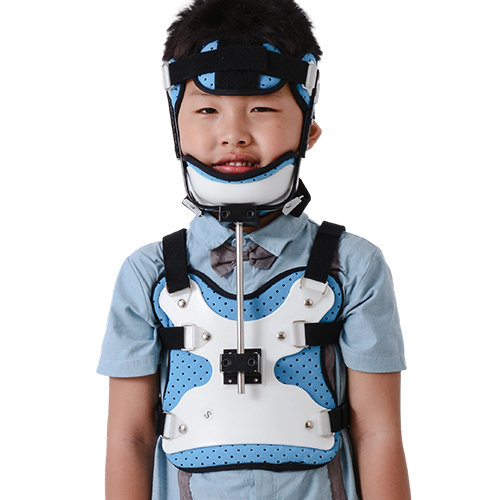
This product is a Pediatric TLSO Brace, widely referred to as a kids’ rigid back brace or pediatric thoracic lumbar sacral orthosis. It is a full-torso, two-piece rigid orthopedic support system used to immobilize, align, and protect a child’s thoracic and lumbar spine following trauma, major surgeries, or for chronic spinal deformity management.
Compliance & Quality Assurance
Every SAK BRACE product is manufactured under strict quality management processes, supporting ISO 13485, CE & EU MDR compliance requirements.
Low position,XS,S,M,L,XL
(with optional straps);Child edition: small medium large
High temperature plate, composite fabric
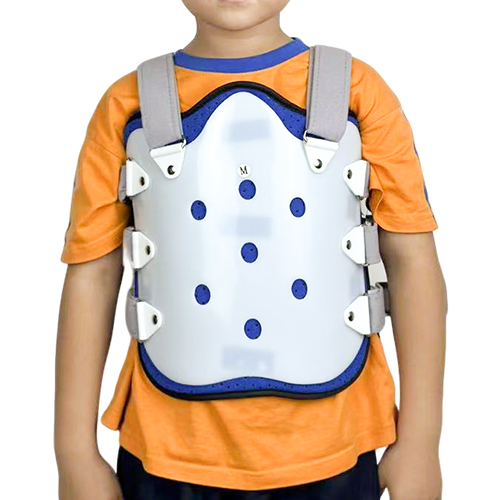
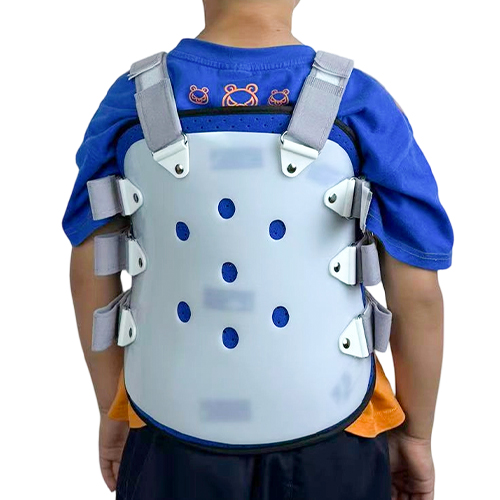
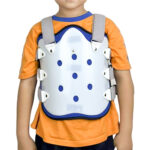
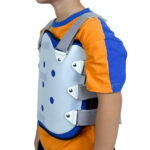
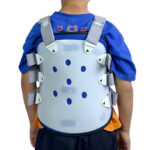
The Pediatric TLSO Brace is a medical-grade, rigid spinal orthosis designed specifically to provide maximum immobilization and stabilization for the thoracic, lumbar, and sacral regions of growing children. Engineered with a lightweight, two-piece hard plastic outer shell (anterior and posterior panels) and a highly breathable, cushioned blue liner, this thoracic lumbar sacral orthosis limits harmful spinal flexion, extension, and rotation.
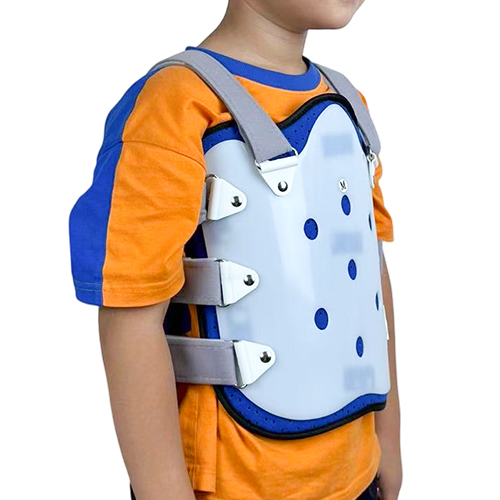
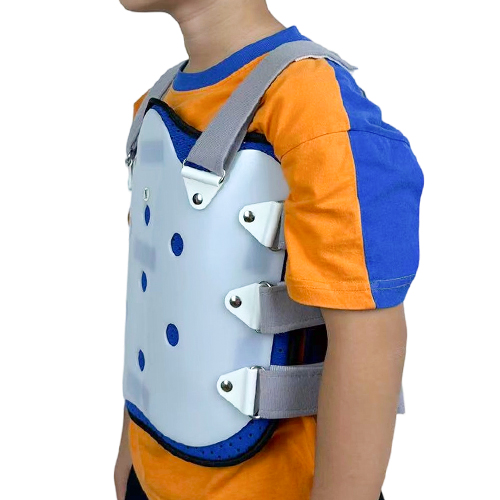
Multiple ventilation ports are strategically positioned throughout the panels to ensure optimal airflow, keeping young skin cool and preventing moisture buildup during extended wear. Featuring adjustable gray shoulder and lateral straps with secure heavy-duty rivets, it delivers a precise, custom contour that stabilizes the spine while maintaining maximum daily comfort.
Product Introduction
Rigid Dual-Shell Clamshell Design
Configured with durable, high-impact white anterior and posterior polymer plates that firmly encase the pediatric torso to restrict unwanted flexion, extension, and lateral bending.
Multi-Point Segmented Lateral Strapping
Outfitted with multiple heavy-duty grey hook-and-loop straps lining the flanks, allowing targeted compression adjustment and complete stability along the waist and ribs.
Perforated Ventilated Structural Panels
Engineered with integrated circular ventilation ports across both shells to encourage consistent heat dissipation and maximize skin breathability during daily use.
Cushioned Full-Coverage Inner Wrap
Lined with a soft, moisture-wicking bright blue fabric padding that wraps around the body, protecting delicate pediatric skin from direct friction against the outer rigid shells.
Adjustable Over-the-Shoulder Suspender System
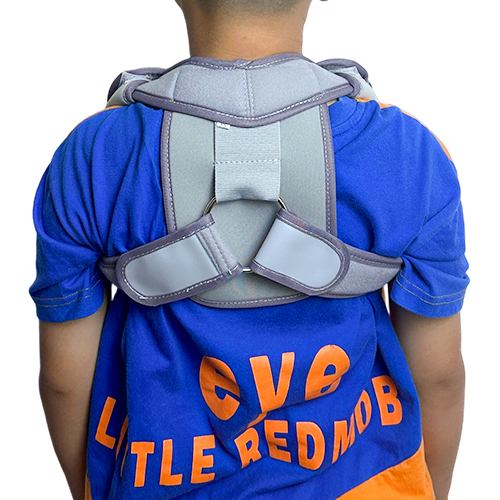
Features wide, padded grey shoulder straps with independent slide rings to securely anchor the brace in place, preventing down-migration or shifting when the child is standing or moving.
Anatomical Pediatric Profile
Contoured specifically to fit a child’s natural body silhouette, ensuring robust clinical immobilization without imposing excessive bulk.
Suitable for:
Pediatric Scoliosis and Kyphosis Patients: Young children and adolescents requiring rigid structural support to manage progressive spinal curvatures or juvenile idiopathic scoliosis.
Post-Operative Pediatric Patients: Children recovering from spinal fusion, lamina procedures, or other complex thoracic/lumbar orthopedic surgeries requiring strict motion restriction.
Kids with Spinal Trauma or Fractures: Toddlers and young youths recovering from compression fractures, stable spinal injuries, or acute high-impact back trauma.
Pediatric Spondylolisthesis Patients: Young athletes or children managing spinal stress fractures or pars defects who need target lumbar stabilization to recover properly.
Indications
Postoperative Thoracolumbar Protection
Delivers rigid, reliable external stabilization following spinal surgeries to guard surgical sites and facilitate safe tissue healing.
Thoracolumbar Fracture Fixation
Immobilizes stable vertebral compression fractures or spinal column injuries to promote proper bone realignment and union.
Lumbar Spine Dislocation Management:
Restricts dangerous twisting, bending, and rotational movements to safely secure shifted vertebrae during conservative recovery.
Thoracolumbar Osteoporosis Support
Relieves heavy load-bearing strain on weakened vertebral bodies, helping to prevent osteoporotic micro-fractures and collapse.
Reliable Spinal Column Stabilization
Serves as a full-enclosure orthotic foundation that stabilizes the torso, offloads spinal pressure, and maintains correct physiological curves.
People Also Ask
How many hours a day does a child need to wear a pediatric TLSO brace?
The daily wear time for a pediatric TLSO brace depends entirely on the condition being treated and the explicit prescription of your pediatric orthopedist. For progressive spinal conditions like scoliosis, children are often required to wear the rigid brace for 16 to 23 hours a day. For post-operative recovery or acute trauma, it may need to be worn continuously, except during controlled sponge baths.
Can a child sit, sleep, or play comfortably while wearing a rigid TLSO back brace?
While the primary purpose of a rigid TLSO orthosis is to restrict spinal movement (flexing, twisting, and bending), the contoured design and built-in ventilation ports allow children to sit at a desk and sleep safely. However, high-impact running, rough play, and physical sports are strictly restricted while wearing the brace to protect both the child’s recovering spine and the device integrity.
What is the best way to clean a pediatric TLSO brace shell and liner?
To clean the brace, separate the front and back rigid plastic shells. Wipe down the plastic exterior and the water-resistant inner blue foam liner using a damp cloth with warm water and mild, hypoallergenic soap. Do not submerge the brace fully in water or use harsh chemical solvents. Always allow the components to air dry completely at room temperature before putting it back on the child.
How do you prevent skin irritation under a child's rigid spinal brace?
To safeguard sensitive young skin from chafing and pressure sores, children should always wear a snug-fitting, 100% breathable cotton undershirt or specialized interface t-shirt underneath the TLSO brace. Ensure there are no wrinkles or seams directly pressing against the skin, and check the child’s torso daily for persistent red marks or signs of skin breakdown.
TLSO (Thoracolumbosacral Orthosis)
Q1. What is a TLSO brace used for?
A: A Thoracolumbosacral Orthosis (TLSO) is designed to stabilize the thoracic and lumbar spine by limiting excessive movement. It is commonly used after spinal surgery, vertebral compression fractures, scoliosis treatment, spinal trauma, and other conditions requiring trunk support. A TLSO brace helps protect the spine during recovery while promoting proper alignment.
Q2. What conditions require a TLSO brace?
A: A TLSO brace may be recommended for patients with compression fractures, scoliosis, kyphosis, osteoporosis-related spinal fractures, post-operative spinal stabilization, or spinal injuries. The appropriate treatment plan should always be determined by a healthcare professional.
Q3. Can a TLSO brace help scoliosis?
A: Yes. Certain TLSO braces are designed to help manage scoliosis by supporting spinal alignment and slowing curve progression, particularly in adolescents during growth. The brace type and wearing schedule should follow a physician’s prescription.
Q4. How long should a TLSO brace be worn each day?
A: Wearing time depends on the patient’s condition and physician’s instructions. Some patients wear a TLSO brace for several hours each day, while others may require full-time use during the early stages of recovery. Always follow your healthcare provider’s recommendations.
Q5. Do you manufacture OEM TLSO braces?
A: Yes. We provide OEM and ODM manufacturing services for TLSO braces, including customized designs, branding, packaging, instruction manuals, and private-label solutions for orthopedic brands, distributors, hospitals, and rehabilitation centers.
Get A Quote
Tell us your requirements.Our orthopedic brace specialists will reply within 1-5 hour!
This product is intended to provide external support only and should not replace professional medical advice. Always consult a healthcare professional for diagnosis and treatment.